The Swiss Alps Without a Tour: Trains, Lifts and Passes
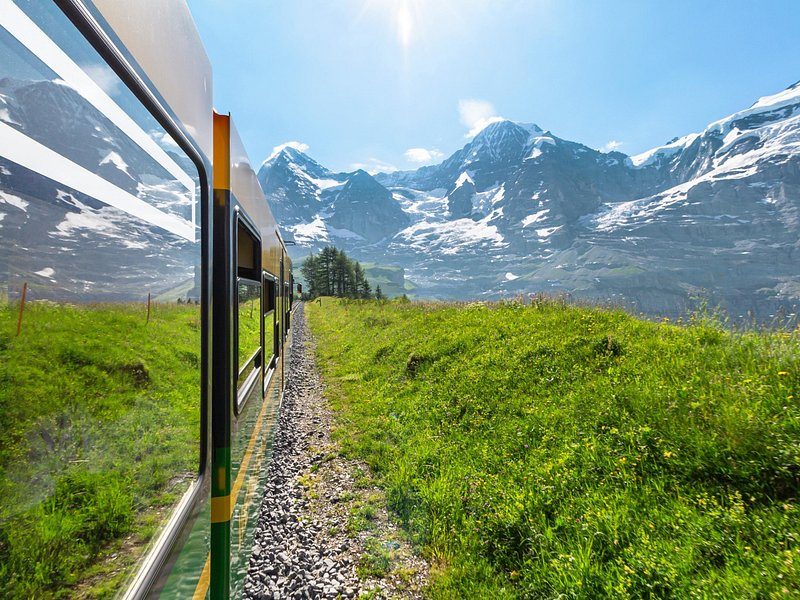
You can see most of the Swiss Alps without booking a tour. The trains run from Interlaken to every valley, the lifts sell tickets at their stations, and the passes halve the summit fares. This guide sets out what a day on your own takes, what it costs, where it goes wrong, and which days are easier with a guide.
Can you do the Swiss Alps on your own?
Yes, and for the valleys it is easy. Interlaken Ost is the hub. From there, trains reach Lauterbrunnen in 22 minutes and Grindelwald in 36, each without a change. Wengen, Mürren and Kleine Scheidegg take one or two changes, and the Jungfraujoch 1 hour 37 minutes with two. The times below are SBB's for a weekday morning in October 2026.
| Where to | On your own from Interlaken | On a tour |
|---|---|---|
| Lauterbrunnen | 22 min by train, no change | The valley walk, $283, falls entry included |
| Grindelwald | 36 min by train, no change | The coach day, $96, lifts extra |
| Wengen | 37 min, one change | The Kleine Scheidegg loop, $412, every train included |
| Mürren | 50 min, two changes | The Mürren rail day, $319, every train included |
| Kleine Scheidegg | 1 h 04, one change | The Kleine Scheidegg loop, $412 |
| The Schilthorn | 43 min to the valley station, one change | The Schilthorn afternoon, $220 |
| The Jungfraujoch | 1 h 37, two changes; rail fare from CHF 129.60 | From Interlaken, $313 |
| Mount Titlis | 1 h 52 from Zurich to Engelberg; CHF 102 return up | From Zurich, $199 |
Every line in that table is a real trip you can make alone. The question is what you give up, and what it saves you.
What does a tour add that a ticket does not?
Four things. A guide, who tells you what you are looking at and when to get off. Transport you do not have to plan, whether a coach, a minivan or a group moving together through the changes. On the Jungfraujoch days, reserved seats and priority boarding. On the hikes, a weather call made by someone who walks that trail every week.
What a tour takes away is freedom. You leave when the group leaves, and you get the time at each stop that the day allows: at least two hours at the Jungfraujoch, about three in Mürren, about four in Grindelwald. On your own you can stay all afternoon.
Which valley days can you do alone?
All of them. Lauterbrunnen is a flat valley floor, and Staubbach Falls drops 297 m off the cliff above the village, as Lauterbrunnen Tourism measures it. The falls inside the mountain at Trümmelbach are about 3 km up the valley, with their own postbus stop. Adults pay CHF 18 and children from 6 to 15 CHF 8. They open from early April to early November, 9:00 to 17:00, and 8:30 to 18:00 in July and August.
Mürren is car-free and sits on the cliff top. Take the cableway from Lauterbrunnen to Grütschalp and walk: Jungfrau Railways lists a leisurely hike from Grütschalp via Winteregg to Mürren of around 1 hour 15 minutes, with the return by train. Wengen is car-free too, and the train from Lauterbrunnen takes 11 minutes.
What does a summit day take on your own?
More planning. For the Jungfraujoch, Jungfrau Railways sells the trip from CHF 129.60. The Eiger Express gondola from Grindelwald Terminal gets you to the top in about 45 minutes with the train, and between 1 May and 31 October 2026 it needs a seat reservation, CHF 10. Buy it when you buy the ticket.
For Mount Titlis, the Engelberg-Titlis return costs CHF 102, or CHF 51 with a Swiss Travel Pass or Half Fare Card. The train from Zurich to Engelberg takes 1 hour 52 minutes with two changes. Until 11 December 2026 you ride up on Titlis Connect, because the revolving car is shut. For the Schilthorn, the valley station at Stechelberg is 43 minutes from Interlaken by train and bus, and the pass takes 50% off the fare. First is simpler still: the gondola from Grindelwald costs from CHF 38 and takes 25 minutes.
What does it cost alone vs on a tour?
It depends on your pass. The fares above are in Swiss francs and the tour fares in US dollars, so compare them at the rate on the day you book. With a Swiss Travel Pass or Half Fare Card, the summit railways cost half, and going alone is usually cheaper. Without one, the gap narrows fast.
Take the Jungfraujoch. Alone, you pay the rail fare from CHF 129.60, plus CHF 10 for the seat in summer, plus the time to plan it. On the guided day from Interlaken, at $313, you pay one fare and get a coach, a guide and a reserved seat. The valley walk works the other way. Alone, it is a train ticket and CHF 18 at the falls. On the tour, at $283, you pay for a guide, a small group and the transport between the stops.
Which pass, if any?
The Swiss Travel Pass covers the public trains, gives you free trips to Rigi, Stanserhorn and Stoos, and takes 50% off the Jungfraujoch, Schilthorn and Titlis railways. In second class for an adult it costs 3 days CHF 254, 4 days CHF 309, 6 days CHF 399, 8 days CHF 439, 15 days CHF 499. It is sold only to people who live outside Switzerland and Liechtenstein.
The Swiss Half Fare Card costs CHF 150 and lasts a month: it halves the fares instead of covering them. The Jungfrau Travel Pass covers the region's trains and lifts for 3 to 8 days, from CHF 210 for three, with the Jungfraujoch as a connecting ticket from CHF 63 in winter and CHF 89 from 1 May to 31 October 2026. None of the three lowers a tour fare. The travel pass page does the arithmetic.
Where do independent days go wrong?
- No gondola seat. You ride up from Grindelwald in summer without a reservation. Book it with the ticket.
- Too many changes. Mürren takes two changes from Interlaken. Write down each one before you set off, or use the SBB Mobile app.
- A summit in cloud. You bought a one-day ticket for a grey day. Check the forecast the evening before, and keep the summit for your clearest day.
- Sunday. The tourist office in Interlaken is closed on Sundays, and some shops in Interlaken, Grindelwald and Lauterbrunnen close too. The trains run.
- The falls with a toddler. Trümmelbach does not admit children under 4.
- The wrong Titlis. Before 11 December 2026 there is no revolving car.
Which days are hard to do alone?
The Milan red train day. The coach does the long road from Milan to the Alps and back, and the timetable across the border is yours to solve alone. From Zurich instead, the train to St. Moritz takes 3 hours 10 minutes, and the regional train on to Tirano 2 hours 12. The red train day from Milan costs $89 with the coach, a guide and the train ticket.
The four-countries day is a car journey through Switzerland, Germany, Austria and Liechtenstein with five stops, and the private day does the driving. And the tandem flight is not a trip you make alone at all: the pilot flies.
When is a guided day worth it?
On your first summit, when a guide and a reserved seat take the worry out of the day. On a hike, when you do not know the trail or the weather. From Milan, where the coach does the hard part. And when your group is four or more, because the Swiss Alps private tour from Interlaken then costs about the same per head as a small-group day.
It is not worth it for Lauterbrunnen alone, for Wengen, or for a short ride up to First. Those are a train ticket and a lift ticket.
How do you plan an independent day?
Start early. On a weekday morning the Lauterbrunnen trains leave Interlaken Ost every 30 minutes, and the 8:04 arrives at 8:26. Buy tickets at the station or in the app, and ask about a pass before you buy single fares. Carry cash or a card for lunch, and a warm layer for any summit.
If you would rather have the valleys without the planning, a Swiss Alps train tour from Interlaken puts every ticket in one fare and a guide beside you.
Frequently asked questions
Do I need a seat reservation to reach the Jungfraujoch on my own?
Is it cheaper to go without a tour?
Does the Swiss Travel Pass cover a tour fare?
Is anything closed on Sundays?
What is Kleine Scheidegg?
What is the best month for a tour in the Alps?
What should I wear on the Jungfraujoch?
Where these facts come from
- Jungfrau Railways: Jungfraujoch - Top of Europe
- Jungfrau Railways: prices and tickets
- Jungfrau Railways: Jungfrau Travel Pass
- Engelberg-Titlis: summer prices and operating times
- Jungfrau Railways: Grindelwald-First
- Trümmelbach waterfalls: the falls
- Trümmelbach waterfalls: getting there, hours and prices
- Lauterbrunnen Tourism: the valley
- SBB: the travel pass for visitors
- SBB: the one-month half-fare card
- swiss-pass.ch (Swiss Travel System reseller): pass prices 2026
- SBB timetable (journeys planned for Wednesday 7 October 2026)
Swiss Alps days when you would rather not plan
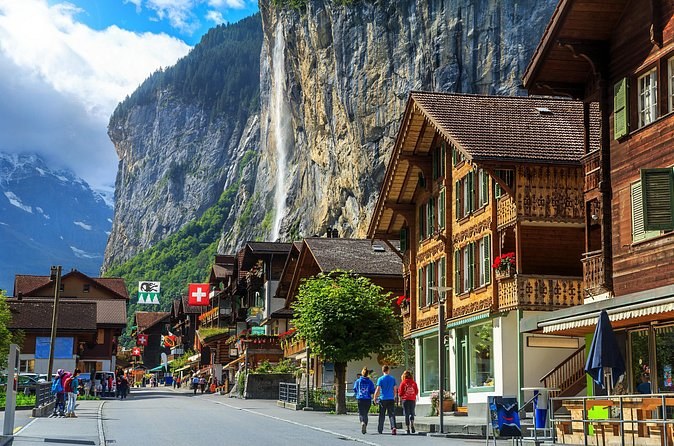
Lauterbrunnen-Mürren: Swiss Alps Small Group Tour from Interlaken
Six to seven hours for up to 15, every train ticket in the fare and about three hours of your own in Mürren.
From $319 per person
Check Availability
Lauterbrunnen Valley Highlights: Mürren, Waterfalls, Swiss Picnic
Five to six hours on the valley floor for up to eight, with the waterfall entry in the fare and CHF 25 of lifts on top.
From $283 per person
Check Availability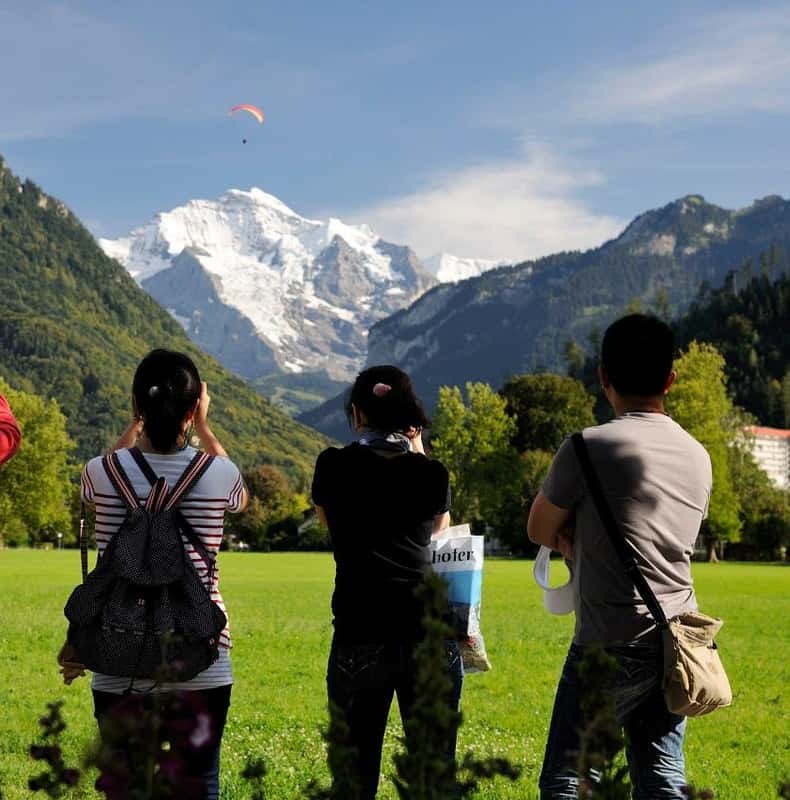
From Lucerne: Guided Tour to Grindelwald & Lauterbrunnen
Ten hours by coach from Lucerne, with free time in Interlaken, Grindelwald and Lauterbrunnen; the lifts are extra.
From $114 per person
Check AvailabilityNext: Decided which days to book? Compare every summit, train and valley day on Swiss Alps Tours.