What to Wear on the Jungfraujoch and Other Swiss Alps Summits
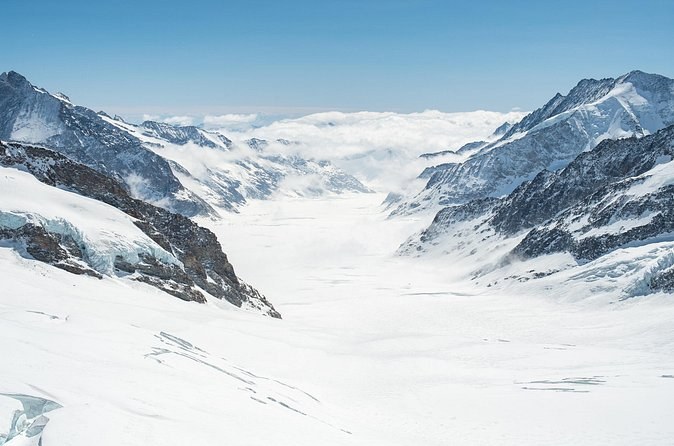
The short answer. Dress for winter, whatever the month. Snow and ice lie on the Jungfraujoch all year, and in July the average daily high there is only 3.4 °C. Bring a warm jacket, shoes with a solid rubber sole and sunglasses. You cannot rent clothes or shoes at the top, so what you leave Interlaken in is what you have.
The mistake on a Jungfraujoch day is dressing for the valley. You leave Interlaken or Zurich in summer clothes, and two hours later you step out at 3,454 m onto snow. The same goes, a little less sharply, for the Schilthorn and Titlis. Here is what to wear and carry, and why.
How cold it is at the top
MeteoSwiss has measured the weather on the Jungfraujoch for decades. Its averages from 1991 to 2020 show how far the summit is from the valley floor, compared here with Interlaken's monthly mean:
| Month | Jungfraujoch, average daily high | Jungfraujoch, average daily low | Interlaken, monthly mean |
|---|---|---|---|
| January | −9.5 °C | −15.5 °C | 0.1 °C |
| April | −6.3 °C | −12 °C | 9.3 °C |
| July | 3.4 °C | −2.1 °C | 18.6 °C |
| August | 3.5 °C | −1.7 °C | 18.1 °C |
| October | −2.1 °C | −7.4 °C | 9.7 °C |
Even in August, the warmest month, the average high at the top is 3.5 °C. Add wind on the terraces and it feels colder. The full year is on Swiss Alps weather by month.
Winter at the top is brighter than you think
The same MeteoSwiss records hold a surprise. In January the Jungfraujoch gets about 117 hours of sunshine, against 67 in Interlaken, because the summit often sits above the cloud that fills the valleys. In July the two are closer: about 181 hours at the top and 223 in Interlaken.
That changes what you pack. A winter day at the top can be bright, still and very cold, so sunglasses and sun cream matter as much in January as in July. A summer day can start warm in the valley and be cold and windy at 3,454 m. Pack for both whatever the season, and check the forecast for the summit itself, not for Interlaken.
A traveller on the Zurich day in September wrote that nobody had told their group what to wear, and they arrived at the top dressed too lightly for the snow. The fix costs nothing: one warm layer more than you think you need, and shoes that grip.
The layers that work
Dress in layers you can take off on the coach and put back on at the top. Your guided day spends hours in a warm coach and a warm train, and only part of the time outdoors.
- A warm jacket: insulated, or a fleece under a windproof shell.
- A warm mid-layer: a jumper or fleece you can wear under the jacket.
- Long trousers: not shorts, even in August.
- A hat and gloves: light ones, easy to carry in a pocket.
- Sunglasses: the light off the snow is hard on the eyes.
- Sun cream: the air is thin, and the snow reflects.
Shoes: grip matters more than warmth
The operators of the Interlaken day ask for shoes with a solid rubber sole, and Jungfrau Railways says good footwear is important for getting around safely. The Plateau is open snow, all year. Trainers with a good tread will do in summer. Leave sandals, smooth soles and heels at the hotel.
If you add a walk on the same trip, such as the hike from First to Bachalpsee, bring walking shoes instead. They cover both days.
Altitude: who should check first
At 3,454 m the air holds less oxygen, and some people feel it: a light head, a headache, tiredness. Jungfrau Railways asks you to be fit and healthy for the trip. It does not recommend it from the seventh month of pregnancy, with a high-risk pregnancy, or for children under two, who struggle to equalise pressure and drink enough.
Walk slowly at the top, drink water, and sit down if you feel dizzy. Most of the summit is indoors or a short walk from a warm room.
Dressing children for the top
Children feel the cold faster than adults, and they spend more time running about on the snow of the Plateau. Give them the same layers you wear, plus gloves they cannot lose and a hat that covers the ears. Waterproof trousers help if they are likely to sit or roll in the snow, and a spare pair of socks weighs nothing.
The guided Jungfraujoch days are not suitable for babies under one, and Jungfrau Railways advises against the altitude for children under two. For a toddler, a lower day in the valleys is kinder, and you can save the summit for when they are older.
What to carry in your bag
- Water and snacks: the guided fares do not include food, and the days start early.
- Your passport or ID: the Zurich day asks for one.
- A card or francs: for lunch at the top or a drink.
- A phone charger: the cold drains batteries faster.
The Schilthorn and Titlis
The Schilthorn summit, at 2,970 m, and the Titlis station, at 3,020 m, are lower but still high, and the same kit works: a warm jacket, a hat, sunglasses and shoes with grip. On Titlis, the glacier attractions and the Ice Flyer chairlift put you outside for longer, so warm gloves matter more there.
The visitor guide covers how the lifts and fares work, and things to do in the Swiss Alps shows what you will see at each summit.
Where these facts come from
- Jungfrau Railways: Jungfraujoch - Top of Europe
- MeteoSwiss: homogeneous monthly series, station Jungfraujoch (JUN)
- MeteoSwiss: monthly data, station Interlaken (INT)
Summit days to dress for
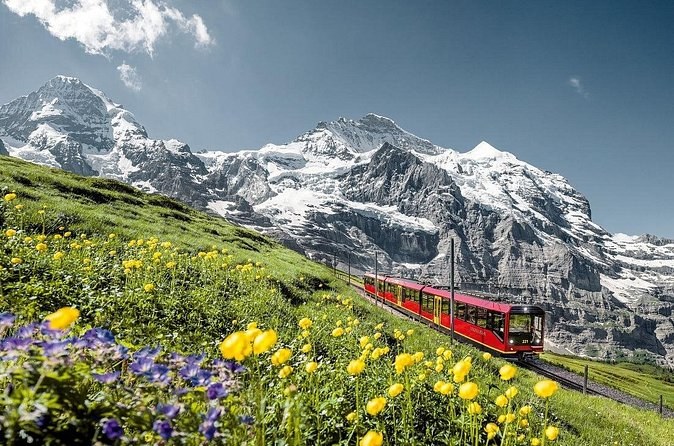
Jungfraujoch Top of Europe Day Trip from Interlaken
The same seven-hour Interlaken day on another booking site, for a group of up to 48, about 2 hours 20 minutes at the top.
From $320 per person
Check Availability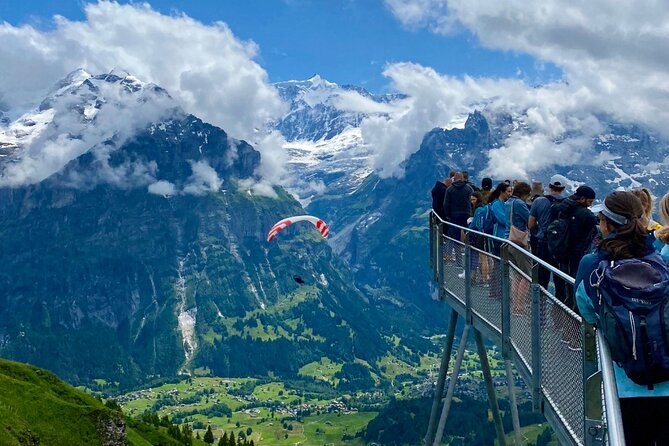
Grindelwald First and Bachalpsee Hiking Tour | From Interlaken
A guided hike for up to 15 from Interlaken's east station, with the day's trains and the First gondola in the fare.
From $363 per person
Check Availability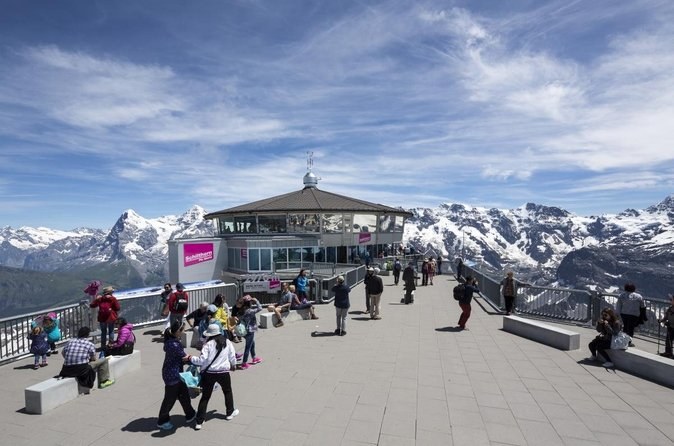
Swiss Skyline: Mt. Schilthorn Afternoon Tour from Interlaken
A five-hour afternoon for up to six: minivan to Stechelberg, the cable cars to the summit and back, and two hours on top.
From $220 per person
Check AvailabilityNext: Pick the summit before the kit in Jungfraujoch, Schilthorn or Titlis?. Every summit, train and valley day sits side by side on Swiss Alps Tours.